All Blogs
latestblog
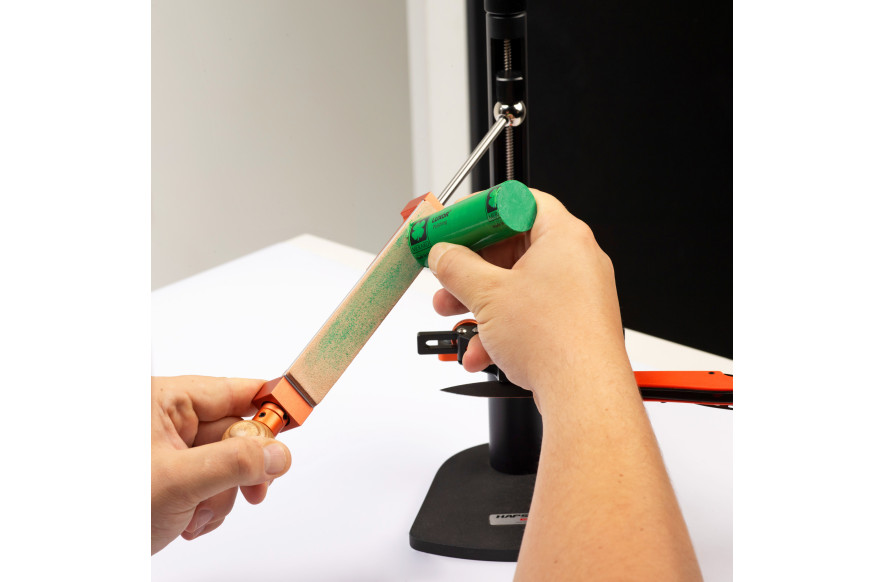
Polishing a knife to a mirror finish — why is it necessary?
Proper use of a leather strop not only keeps the cutting edge as sharp as
possible, but also gives it a mirror finish.
Is it necessary to use polishing compounds on a leather strop?
Yes, we recommend using Hapstonesuspensions and pastes, or compounds such as Dialux,Luxor, and PDT CBN pastes.
If you have a double-sided strop, apply the compound to the suede side and
leave the smooth side clean for the final polish.

Products on our website:
Leather and Suede Strops

How to choose between smooth and suede leather?
If you work with pastes or suspensions, suede absorbs the composition
better.
If you want to polish without additives, choose smooth leather.
For cutters and engraving tools, use suede with paste.
For knives, use smooth leather with a light finish.
What is the grit of a leather blank?
Leather itself does not have graininess, but in terms of polishing effect,
it is comparable to an abrasive thinner than 0.5 microns, i.e., more than
30,000 JIS.
How much pressure should be applied when polishing?
Minimal. Let the blade barely touch the leather, as if it were moving under
its own weight.
Can you cut the leather on the blank?
If you work correctly, no. Always guide the leather in the direction of the
cutting edge.
If you try to “cut into” the leather, a cut is inevitable.
Does the blade become convex/warped from polishing on leather?
Leather is softer than stone, but the Hapstone leather blank and
high-quality pastes (Dialux,Luxor, PDT CBN) are so thin that the lens effect is minimal. This is not a
problem for knives, but when working with chisels, avoid excessive passes on
the flat side.

Can a blunt blade be sharpened on a leather blank?
Theoretically, yes, but the leather strop is designed for finishing
polishing, not rough sharpening.
To restore the geometry, use whetstones, then switch to a leather strop
with Hapstonesuspension or Dialux pastes for perfect sharpness.
Does a leather strop remove burrs?
Yes, and it does so delicately. Hapstoneleather strops are the best tool for removing burrs, leaving a
perfectly clean cutting edge.
Why does the knife seem less aggressive after polishing?
There are several reasons:
1. After polishing, the microstructure of the teeth disappears—the edge
becomes smoother.
2. If you polish after using a very coarse stone, it will take longer.
3. You may be setting the angle too high when polishing—lower the angle
slightly below that used for sharpening.

Useful tips from Hapstone
• Apply a thin and even layer of suspension; too much abrasive
If you are using a suspension, shake it before use
• Do not mix different pastes/suspensions on the same whetstone.
• Store the blank with the leather in a dry, clean place.
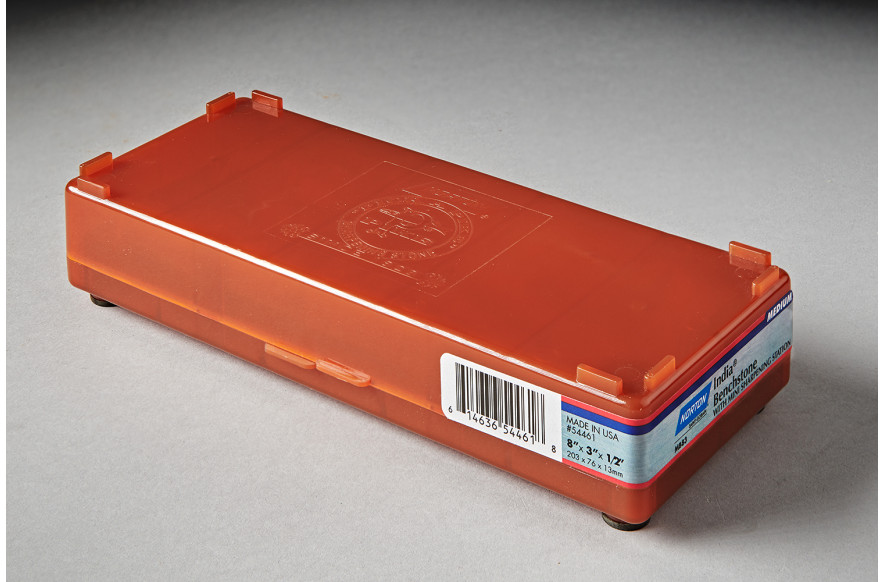
What Grit is a Norton Fine, Medium and Coarse?
What Grit is a Norton Fine, Medium and Coarse?
Norton makes a number of stones in a Fine, Medium and Coarse grit. But those grits are seldom stated in terms of the actual grit. Based on our experience and referencing their documentation, we have determined the grits. Interestingly, Norton produces different grits for their Norton India Stones (an aluminum oxide stone) and their Norton Crystolon Stones (a silicon carbide stone).
While there is no one standard in use for grits, we generally use the standard most commonly associated with waterstones (JIS). Why do we do this? For a few reason actually. First, on the lower grits, it fairly closely follows the USA standard (CAMI) for coated abrasives (sandpaper) and the European standard (FEPA). Second, the waterstone standard has a very wide range that starts very coarse and finishing extremely fine. The CAMI and FEPA standards stop where the waterstone grits keep going finer. This allows us to use one standard across different stones. Lastly, the micron measurement allows for excellent on relative particle size comparison, so from that perspective, that is a great way to measure grit. However, if you're not familiar with that measurement, the numbers are somewhat hard to interpret. For example, a 45 micron particle size is hard to imagine, but if we said it was roughly a 325 grit, you gain some perspective.
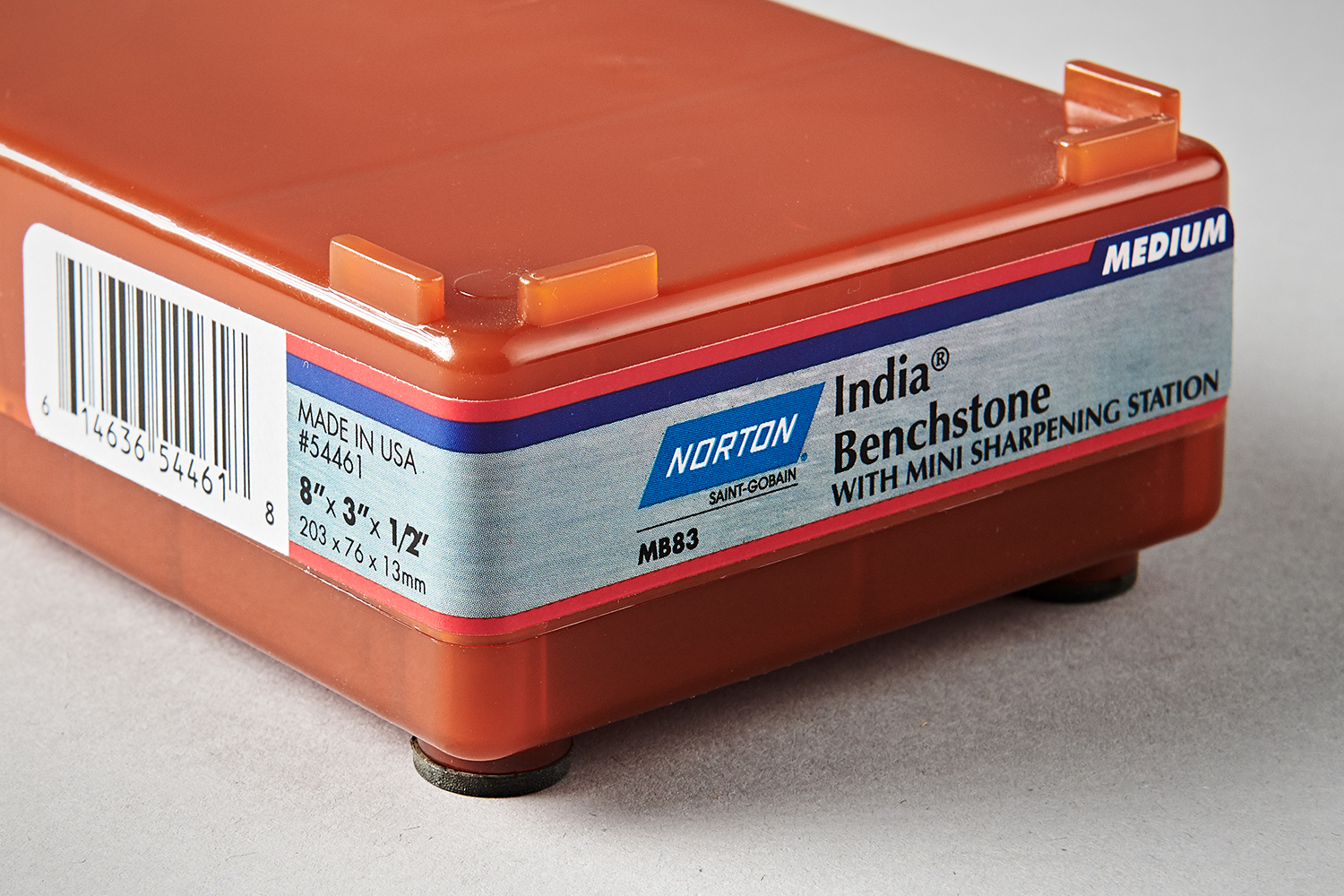
Norton India and Norton Crystolon Grit Chart
Stone Type | Coarse Grit | Medium Grit | Fine Stones |
|---|---|---|---|
150 | 240 | 400 | |
| 120 | 180 | 320 |
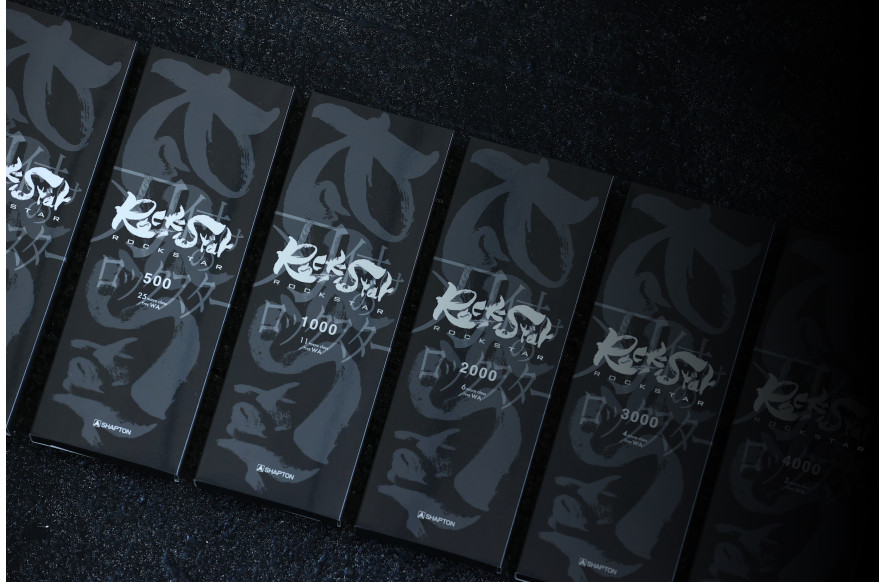
About the precision and efficiency of the Shapton RockStar
Are you tired of struggling with dull blades in the kitchen or workshop? Meet the RockStar grindstones - the world's top of the line in artificial grindstones. In this blog, we will explore the features, benefits and unique qualities of the RockStar series. Whether you're a professional chef, craftsman or DIY enthusiast, RockStar is ready to revolutionize your sharpening experience.
Shapton is a well-known name in the sharpening world that has built a legacy of excellence over decades. With a commitment to innovation and precision, Shapton is constantly pushing the boundaries of sharpening technology, and the RockStar series is a clear testament to their dedication.
Unrivaled quality and stability
One of the things that sets Shapton sharpening stones apart, including the RockStar Series, is their unmatched quality and consistency. Shapton uses advanced manufacturing processes to ensure that the abrasive particles are precisely calibrated. This ensures that every grindstone in the RockStar line delivers consistent performance, cut after cut.
Knife sharpening tool: How do I check the sharpness of my knife?
The concept of sharpness of a knife is directly related to the concept of the cutting edge, which is formed at the intersection of the two planes of its blades. A well-sharpened knife has both blades polished to such an extent that they form a very thin, sharp edge, which must necessarily have a V-shape. The essence of the sharpening process is to remove excess particles from its blades so that the edge becomes V-shaped. The easiest way to do this is to use a special device for sharpening knives. How to check the sharpness of the knife?
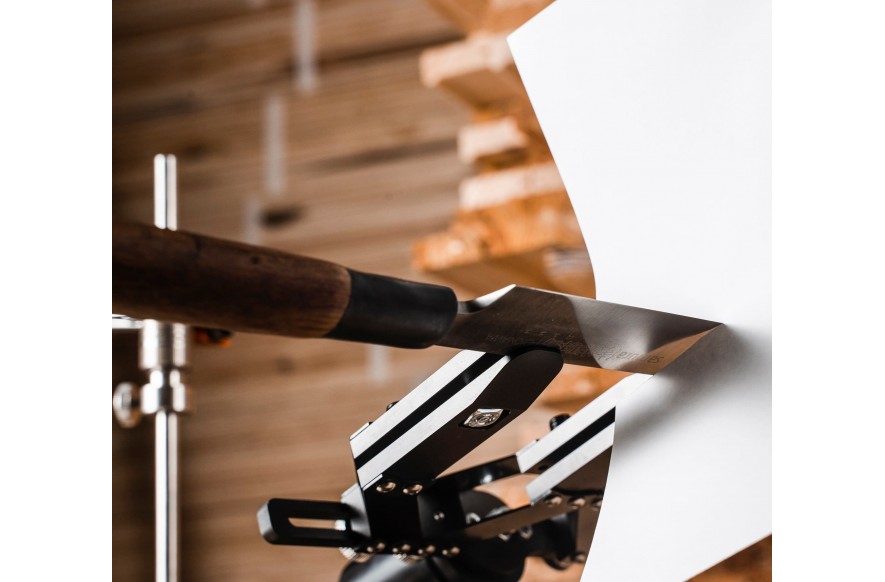
Rather well-known and simple is the tomato test. Try to cut a thin slice of a ripe tomato. If it can be done without pressure on the skin, and the juice stays inside, then the knife is sharp. You can also use paper to check the sharpness of the knife. Holding a sheet of paper in one hand and the knife in the other, try to cut a thin strip of it all the way through. A blunt knife will cut the paper unevenly or not at all. You can also check the sharpness of the knife on the hair of your hand, though you should do it with caution. Move the knife along the arm along the hair against its growth, without touching the skin. A sharp enough knife will cut through all the hairs in its path in one pass, but to achieve this sharpness you can only use the special sharpening abrasives found on knife sharpening systems such as the Hapstone Pro V5, Shapton Pro and others.
Proper knife sharpening or why knife sharpeners are important
When buying a knife, especially an expensive one, it is worth buying a good sharpener or sharpening set. Do not believe the stories of sellers about self-sharpening or perpetually sharp knives - they are just a marketing ploy to encourage you to buy it. No matter what material the knife is made of, over time its sharpness will disappear. Only collector's knives do not get blunt because they are always on the shelf and the only thing that threatens them is dust. Only the knife that has never been used will always be sharp.
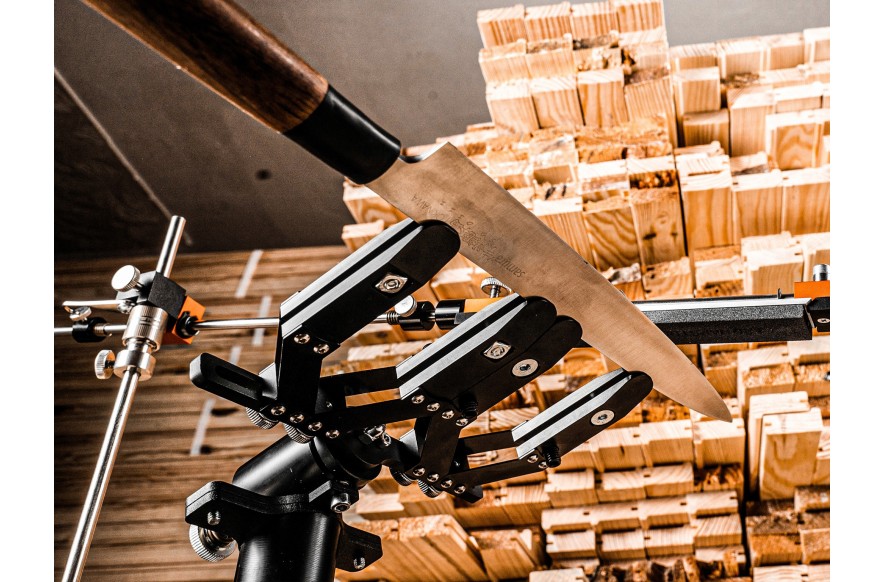
So, any knife sooner or later will have to be sharpened, and it is extremely important to do it correctly. Obviously, no sharpener or even the biggest sharpening set will do all the work for us. It is also true that quality sharpening without a good tool is unlikely, especially if we are talking about a heavily blunted knife made of hard, abrasion-resistant steel. Therefore, if you decide to buy a sharpening stone or a device for sharpening knives, it is worth making sure that the tool you choose is fully consistent with the type of knife and the material from which it is made. Proper knife sharpening is not just a matter of removing excess steel from the blade, but a kind of art worth mastering.
Natural stones for sharpening knives: Norton and Arkansas stones
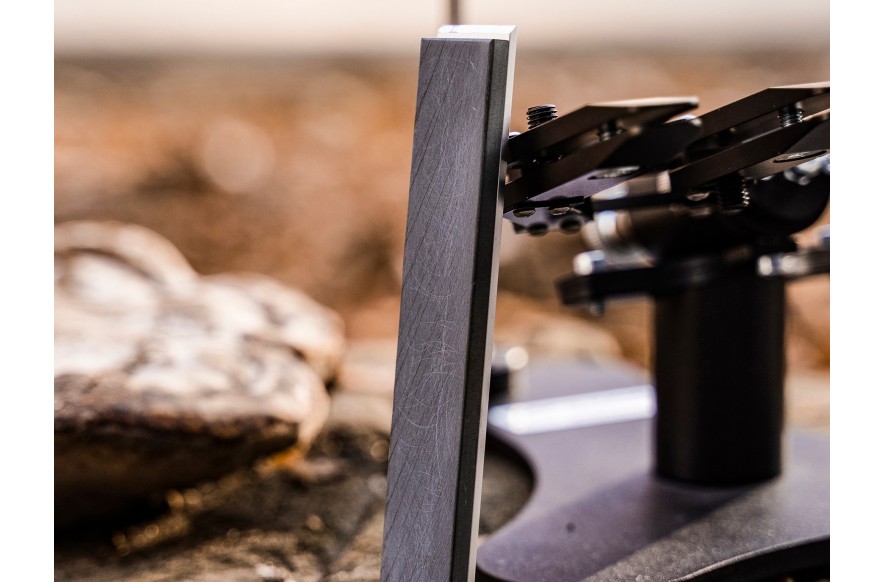
The most popular natural stones for sharpening knives are the Arkansas stone and the American-made Norton sharpening stone, as well as Japanese knife sharpening stones. The Arkansas stone is a special fine-grained quartz consisting of fused crystalline grains 1-6 microns in size. If you decide to buy Arkansas, keep in mind that it does not have the abrasive scales used for synthetic materials. Soft Arkansas is used in the initial stages of sharpening, the Hard Arkansas and Black Arkansas varieties in the later stages. Translucent Arkansas is the finest of the entire line of stones and works very finely.
The Norton sharpening stones, also made of fine quartz, are considered the best for sharpening cutting tools. Norton Soft Arkansas is designed for the basic sharpening of cutting tools, Norton Hard Translucent Arkansas is for finishing sharpening or fine finishing. The main difference of Norton Arkansas Hard Oilstone from Japanese water stones is that no slurry is formed on the surface of the stone, the sharpening takes place on the surface of the stone. Oil is used as a lubricant when working with these stones. Water may also be used, but oil may not be used afterwards. The Norton Hard Translucent stones allow perfect polishing of the edge, although it takes quite a long time.
Knife sharpening stones: grit
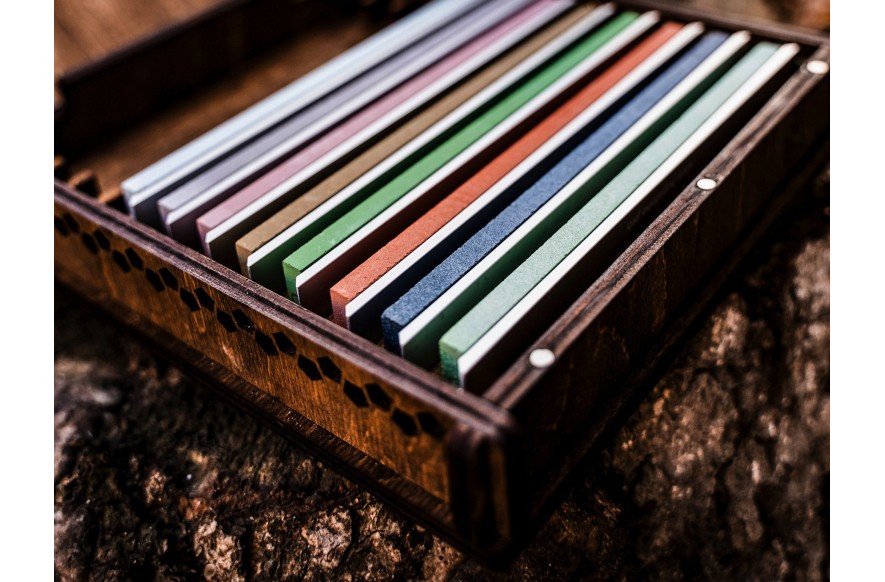
The most important parameter of sharpening stones is the grit or, simply put, the roughness of their surface. The difficulty is that there are several different grading systems used around the world to estimate the grit level of abrasives. The most common is gradation of grit according to the number of abrasive grains per square centimeter, which is used for synthetic abrasives. In this case, the grit will be a numerical value, for instance 600 grit (rougher) or 1200 grit (less rough). Another method of evaluating the grit of grinding abrasives uses the parameters "Extra Fine" (very fine), "Fine" (fine), "Coarse" (coarse) and "Extra Coarse" (very coarse), but their understanding may differ from manufacturer to manufacturer. Verbal indications of grit size can be supplemented by the parameter of the number of grains per square centimeter, but there is no unified standard ratio for them either. Some manufacturers of knife sharpening tools indicate the grit in microns, which is the most correct method, because the ratio of the grit of steel to the sharpening stone gives an idea of what happens to the structure of the metal during sharpening. There are special comparison tables of the ratio of grit markings in different designation systems.
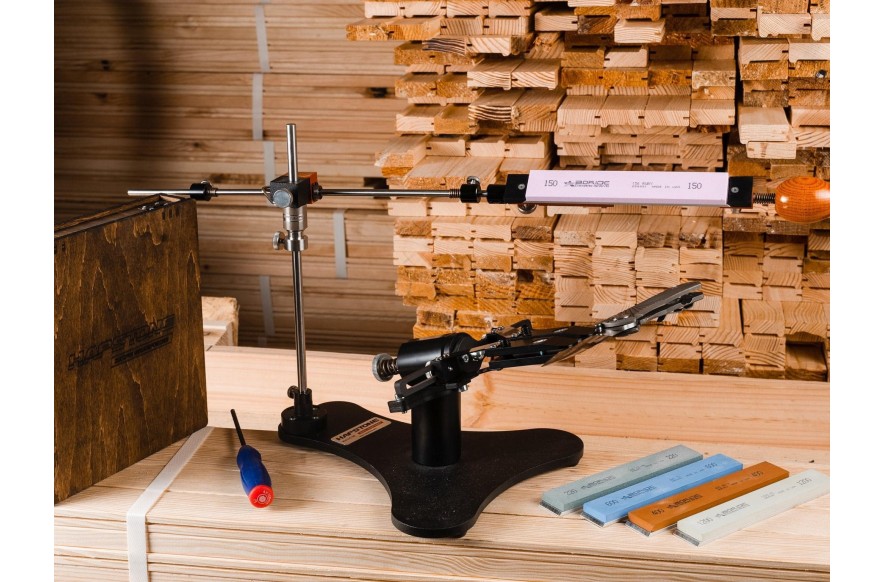
Best Upgradable Sharpener Hapstone R2
Best Upgradable Sharpener: Built atop a set of rubber-coated supporting legs, the Hapstone R2 Standard is a modular base system that features a 360° rotating pivot unit with an integrated parking hook for the guide rod, linear ball bearings, and an auto-adjustable universal stone holder. While not sold with any included stones or accessories as standard, what makes this tabletop sharpening system so impressive — on top of it being capable of sharpening blades up to 12” in length and up to a whopping 0.35” in thickness — is the enormous number of available add-ons, upgrades, models, and stones that the Ukrainian company offers for the R2 Standard. Sold in sets of five or six, this bench top system is offered with 11 different optional stone sets including Boride stones, silicon carbide stones, aluminum oxide stones, diamond stones, and CBN stones. Optional add-ons for the system include a fine-tuning adapter, an LED lighting system, a digital angle gauge, a scissors module, and a digital blade edge microscope with a 4.3” LCD display.